

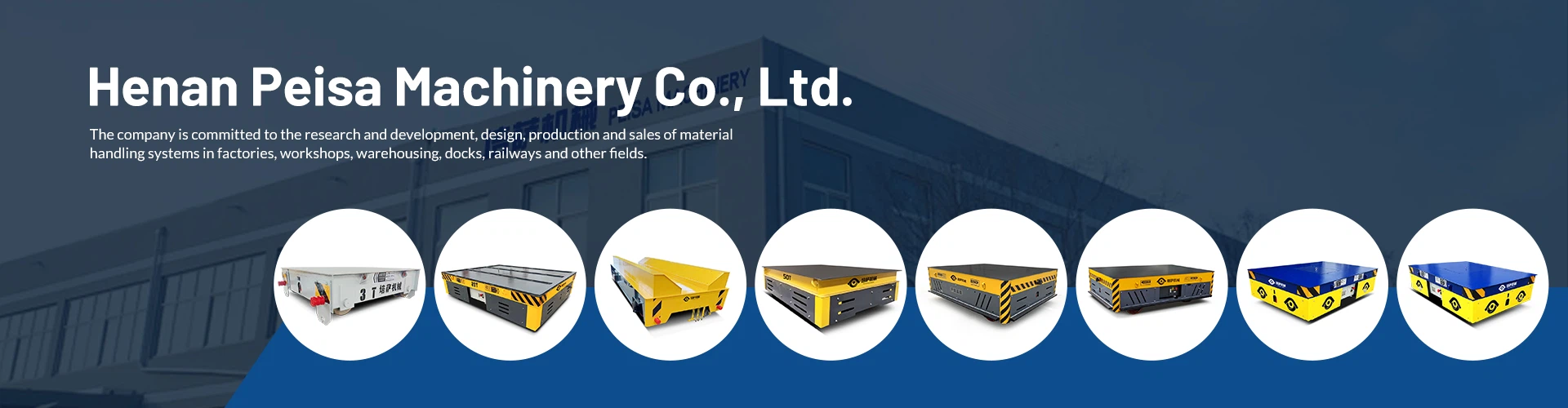

Trackless transfer cart is a battery‑powered, self‑propelled industrial vehicle for moving
heavy loads without fixed rails. Its exceptional maneuverability-forward, backward,
turning, and spot rotation-suits complex workshop layouts. Eliminating rails cuts
infrastructure costs and floor damage while enabling unlimited travel. It carries loads
from a few tons to hundreds of tons with stability. Safety features include radar
obstacle detection, automatic braking, and alarms. With long‑lasting batteries and
smart charging, it supports continuous work. Controlled via remote or handle and
customizable with lifting options, it serves metallurgy, automotive, shipbuilding, and
mining industries.

Advantages of Trackless Transfer Carts
Trackless transfer carts are industrial vehicles designed to transport heavy loads
without the need for fixed rails or tracks. Below are their key advantages:
1.High Flexibility and Maneuverability Unlike traditional rail-guided carts, trackless
transfer carts are not restricted by fixed tracks and can move freely on flat
surfaces. They can travel forward, backward, turn left and right, and even move
laterally. Advanced steering mechanisms allow them to maneuver through
narrow or complex spaces with ease. Some models feature 360-degree steering
or can rotate on the spot, making them ideal for confined workshop environments.
2.Lower Installation and Infrastructure Costs
Since trackless carts do not require
tracks to be laid on the ground, they eliminate the high costs associated with
installing and maintaining rail systems. This also means no disruption to existing
factory floors or production operations during installation. For manufacturers
building new plants or upgrading facilities, trackless models reduce construction
3.costs and avoid damaging hardened floors.
Operational Freedom and Long-Distance Capability Powered by batteries rather
than cables, trackless transfer carts have no operational distance limitations.
They can operate across large workshops, between different production areas,
and even outdoors. Their rubber or polyurethane wheels provide good traction,
anti-slip properties, and adaptability to uneven road surfaces.


