

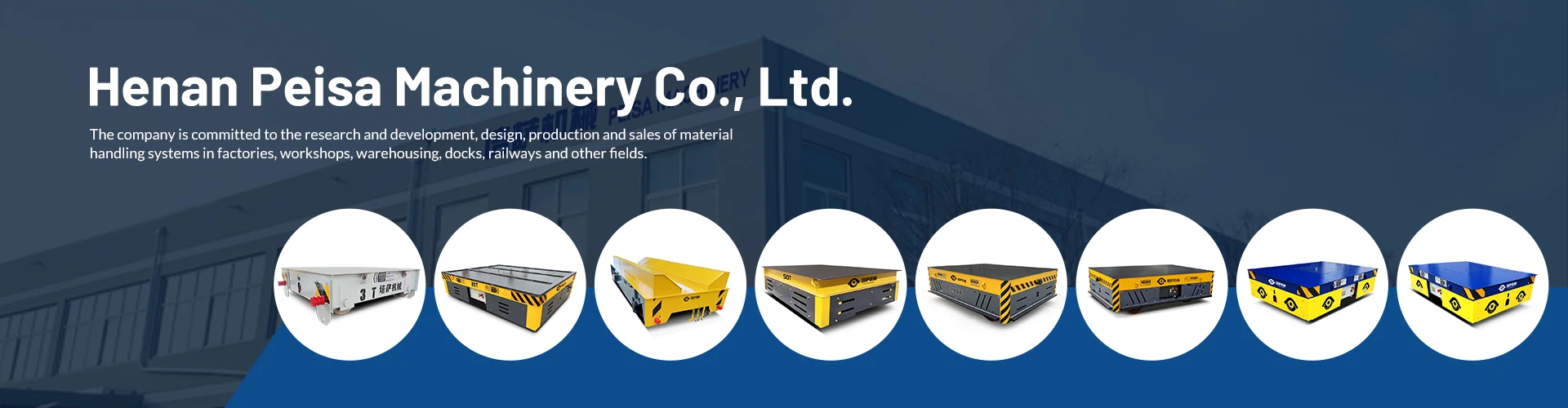

Steering wheel drive electric transfer cart is a heavy‑load material handling equipment widely adopted in modern industrial workshops. Equipped with independent steering wheel modules, it realizes flexible direction control without relying on fixed rails. It has become a preferred solution for complex‑layout factories, replacing traditional rail‑bound transfer carts in many working conditions.

Core Advantages
1. Highly flexible steering and omnidirectional movement
The steering wheel unit supports 360‑degree rotation, enabling forward, backward, lateral movement, pivot turning and zero‑radius turning. It can operate smoothly in narrow aisles and crowded workshop areas, and does not need reserved rail laying space.
2. No rail installation required, low site transformation cost
Different from rail‑type electric flat cars, it needs no track construction, no ground excavation or fixing work. Users can put the cart into service directly after delivery, which greatly cuts site modification expenses and shortens the commissioning cycle. It is also suitable for temporary or frequently‑adjusted production lines.
3. Strong load‑bearing capacity for heavy‑duty tasks
The steering wheel drive series can cover load capacity from 5 tons to 50 tons. The reinforced frame and high‑strength polyurethane wheels ensure stable bearing under heavy loads, with low ground pressure to protect workshop floors.
4. Diversified control modes
It is commonly configured with wireless remote control, pendant control, and optional automatic driving function. Operators can control the cart from a safe distance, reducing manual labor and improving operation safety.
5. Good adaptability to complex workshop environment
It can run on concrete, epoxy and other common factory floors. It is suitable for workshops with scattered working stations, multi‑branch production lines and frequent route changes.
6. Low maintenance and long service life
The integrated steering wheel drive system has few vulnerable parts. Daily maintenance mainly focuses on battery inspection and wheel wear check. It features stable performance and low failure rate for continuous industrial production.

Application Scenarios
1. Heavy‑duty workshop material transportation
It is widely used in machinery manufacturing, steel processing and equipment assembly workshops. It transfers large workpieces, castings, structural parts and finished products between different processing stations.
2. Warehouse and storage yard handling
In large warehouses and stock yards, it transports heavy goods, molds and raw materials. It can shuttle between storage racks and loading‑unloading zones without fixed routes.
3. Automotive and new energy industry
For auto parts workshops and new energy battery factories, it delivers large‑size components, chassis and battery packs. The flexible turning performance fits complex production line layouts.
4. Shipbuilding and heavy‑equipment manufacturing
In shipyards and heavy‑machine plants, it moves oversized workpieces and equipment components. The zero‑turn function helps work in limited space of assembly workshops.
5. Mold workshop and die‑casting factory
It transports heavy molds, die‑casting parts. The cart can precisely position to the machine tool loading‑unloading position, improving production efficiency.
6. Logistics and terminal auxiliary handling
It is applied in logistics parks, factory terminals for bulk cargo transfer, supporting the loading and unloading of large‑scale goods.


