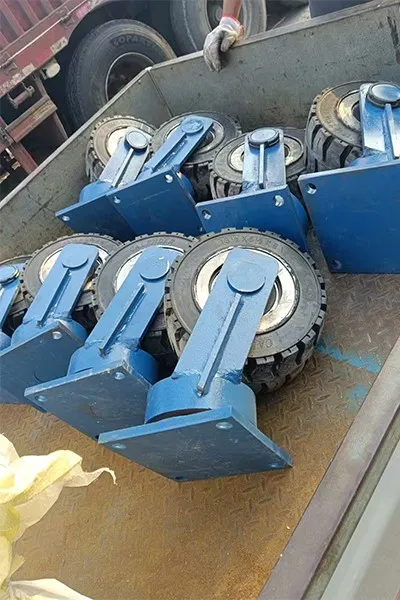
First, let's clarify: What are polyurethane tread tires?
You can think of them as solid, hard, and wear-resistant tires. Their main material is polyurethane (a high-hardness plastic), with a tread pattern embossed on the surface to enhance grip. Unlike pneumatic tires, they are made of a solid, wear-resistant, high-polymer polyurethane material.
When should I consider using them?
Polyurethane tread tires are often a good choice in the following situations:
The floor is flat but slightly slippery or lightly oily.
If your workshop has a smooth concrete, epoxy, or emery floor that occasionally has water or oil stains, the tread design of these tires can effectively prevent slipping. This helps keep the trackless transfer cart from sliding when starting or braking, making them safer than smooth polyurethane tires.
Heavy loads and the need for traction.
Polyurethane has excellent load-bearing properties and is suitable for medium to heavy loads. When your flatbed cart needs to bear heavy loads and also climb certain grades (for example, slopes of 5 degrees or less) or requires sufficient traction, treads can provide better grip and prevent spinning.

Considering wear resistance.
If you're primarily looking for wear resistance, polyurethane tires offer a very long lifespan, far exceeding pneumatic tires. Polyurethane wheels can have a service life of approximately six years or more (depending on the surface environment).
When is it not recommended to use them?
Even when choosing tires, you need to avoid pitfalls. Choose carefully in the following situations:
Severely uneven surfaces: If your workshop floor has numerous potholes, cracks, or large undulations, polyurethane tires, due to their high hardness and limited elasticity, will negatively affect their lifespan, cargo stability, and the vehicle's lifespan.
Outdoor or extreme environments: Polyurethane materials may age and become brittle under prolonged exposure to sunlight or extreme low temperatures, affecting performance. They are also not suitable for purely outdoor gravel roads or muddy surfaces.
Ultimate silence is required: While quieter than metal wheels, polyurethane wheels still produce some rolling noise when running on smooth surfaces. Cleanrooms that are extremely sensitive to noise may need to evaluate this.