

Industrial forklifts are indispensable workhorses in modern industries, playing a crucial role in material handling and logistics operations. As a trusted supplier of industrial vehicles, I am excited to share an in - depth understanding of the working principle of industrial forklifts.
1. The Basic Structure of Industrial Forklifts
Before delving into the working principle, it's essential to understand the basic components of an industrial forklift. A typical forklift consists of a mast, carriage, forks, counterweight, power source, and a control system.
The mast is the vertical assembly that allows the forks to be raised and lowered. It is usually made of high - strength steel to withstand heavy loads. The carriage is attached to the mast and holds the forks. The forks are the primary load - carrying components, designed to slide under pallets or other loads. The counterweight at the rear of the forklift is used to balance the load being lifted at the front, preventing the forklift from tipping over.
The power source can be either an internal combustion engine (using gasoline, diesel, or propane) or an electric battery. Electric forklifts are becoming increasingly popular due to their lower emissions and quieter operation, especially in indoor environments. The control system includes a steering wheel, pedals, and levers that the operator uses to control the movement and functions of the forklift.
2. How the Lifting Mechanism Works
The lifting mechanism of a forklift is based on a hydraulic system. Hydraulic systems use the principle of Pascal's law, which states that pressure applied to a confined fluid is transmitted equally in all directions.
In a forklift, the hydraulic system consists of a hydraulic pump, hydraulic cylinders, and a reservoir of hydraulic fluid. When the operator activates the lift lever, the hydraulic pump is engaged. The pump draws hydraulic fluid from the reservoir and pressurizes it. This pressurized fluid is then sent to the hydraulic cylinders located on the mast.
The hydraulic cylinders are essentially tubes with a piston inside. When the pressurized fluid enters the cylinder, it pushes the piston upward. Since the carriage and the forks are attached to the piston, they are also lifted. The amount of lift is controlled by the amount of fluid pumped into the cylinders. To lower the forks, the operator releases the lift lever, and a valve allows the hydraulic fluid to flow back into the reservoir under the weight of the load and the forks themselves.
3. Movement and Steering
The movement of an industrial forklift is powered by its engine or electric motor. In an internal combustion forklift, the engine converts the chemical energy of the fuel into mechanical energy, which is then transferred to the wheels through a transmission system. Electric forklifts use an electric motor to drive the wheels.
Steering in a forklift is usually accomplished through a hydraulic steering system. Similar to the lifting mechanism, the steering system uses hydraulic pressure to assist the operator in turning the wheels. When the operator turns the steering wheel, a hydraulic pump is activated, which sends pressurized fluid to a steering cylinder. The movement of the steering cylinder then turns the wheels.

4. Load Balancing and Safety
Load balancing is a critical aspect of forklift operation. As mentioned earlier, the counterweight at the rear of the forklift is designed to balance the load being lifted at the front. The position of the load on the forks also affects the stability of the forklift. The load should be centered on the forks and as close to the mast as possible to maintain stability.
Forklifts are also equipped with various safety features. For example, most forklifts have a load - sensing device that prevents the forklift from lifting a load that exceeds its rated capacity. There are also tilt sensors that detect if the forklift is tilting too far forward or backward and can take corrective actions, such as preventing further lifting or lowering.
5. Different Types of Industrial Forklifts and Their Working Principles
There are several types of industrial forklifts, each with its own unique working principle and application.
Counterbalance Forklifts
Counterbalance forklifts are the most common type of forklift. They use a large counterweight at the rear to balance the load at the front. The working principle of counterbalance forklifts is similar to what has been described above, with a hydraulic lifting mechanism and a power - driven movement system. These forklifts are suitable for a wide range of applications, from warehouses to construction sites.
Reach Trucks
Reach trucks are designed for narrow - aisle applications. They have a unique feature called a reach mechanism. In addition to the normal lifting function, the reach mechanism allows the forks to extend forward beyond the front wheels of the forklift. This is achieved through a combination of hydraulic cylinders and a telescopic mechanism. When the operator activates the reach function, the hydraulic cylinders push the carriage and the forks forward, allowing the forklift to access loads in narrow aisles.
Order Pickers
Order pickers are used for order - picking operations in warehouses. The operator stands on a platform that can be raised along with the forks. The working principle of order pickers is similar to that of other forklifts, but the focus is on providing easy access to individual items for picking. The platform can be raised to different heights using a hydraulic or electric lifting system, and the operator can move the forklift forward and backward to pick items from the shelves.
6. Our Product Range and Related Links
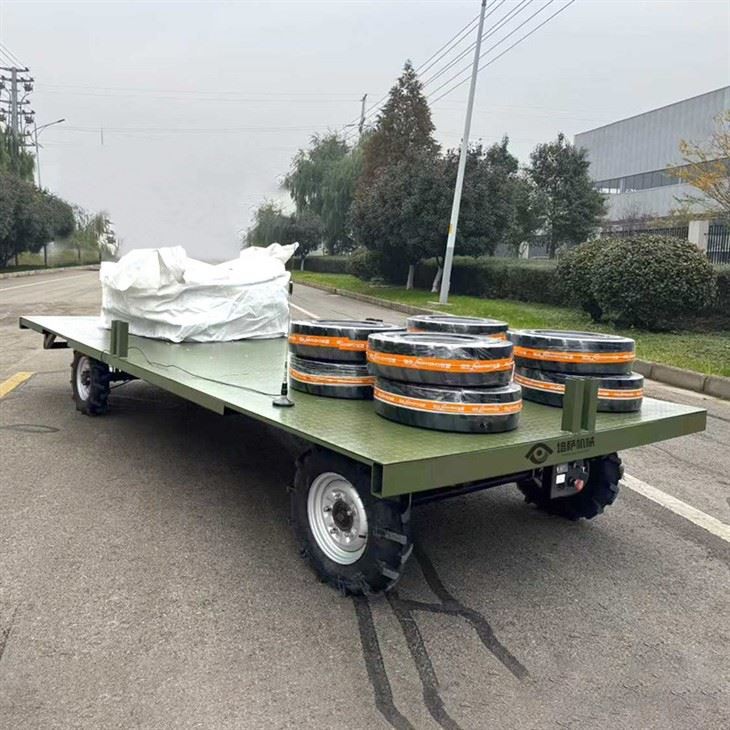
As an industrial vehicle supplier, we offer a wide range of high - quality forklifts and other industrial vehicles. In addition to forklifts, we also provide products such as Heavy Duty Flatbed Trailer, Electric Trolley Carrier, and Factory Electric Platform Truck. These products are designed to meet the diverse needs of different industries, providing efficient and reliable material handling solutions.
7. Conclusion and Call to Action
Understanding the working principle of industrial forklifts is essential for both operators and businesses. It helps operators to use the forklifts safely and efficiently, and it allows businesses to make informed decisions when choosing the right forklift for their operations.
If you are in the market for industrial vehicles, including forklifts, heavy - duty flatbed trailers, electric trolley carriers, or factory electric platform trucks, we are here to help. Our team of experts can provide you with detailed information about our products, assist you in selecting the right vehicle for your needs, and offer after - sales support. Contact us today to start a discussion about your procurement requirements and let us help you find the best solutions for your business.
References
- "Forklift Operator's Manual" - Various manufacturers
- "Industrial Material Handling Equipment Handbook" - Industry - specific publications
- "Hydraulic Systems in Industrial Vehicles" - Technical journals on fluid power systems