

Hey there! As a supplier of Industrial Vehicles, I've gotten tons of questions about emission standards for these bad boys. So, I thought I'd break it all down for you in this blog post.
The Basics of Emission Standards
First off, what exactly are emission standards? Well, they're basically a set of rules put in place by governments to control the amount of pollutants that vehicles can emit into the environment. These standards are super important because they help protect our air quality and reduce the impact of industrial activities on the planet.
There are different types of emissions that these standards target. The most common ones include carbon monoxide (CO), hydrocarbons (HC), nitrogen oxides (NOx), and particulate matter (PM). Each of these pollutants can have serious health and environmental effects. For example, carbon monoxide is a colorless, odorless gas that can be deadly in high concentrations. Hydrocarbons and nitrogen oxides contribute to the formation of smog and ground - level ozone, which can cause respiratory problems. Particulate matter can also cause health issues, especially for people with asthma or other lung conditions.
Emission Standards for Different Types of Industrial Vehicles
Electric Industrial Vehicles
Let's start with electric industrial vehicles. These are some of the cleanest options out there, and they've been gaining a lot of popularity in recent years. Since they run on electricity, they produce zero tailpipe emissions. That means no CO, HC, NOx, or PM coming out of the exhaust.
Our 2 Tons Electric Platform Truck is a great example. It's powered by an electric motor, which not only makes it environmentally friendly but also very quiet. This is a huge advantage in indoor industrial settings where noise can be a problem. And because there are no emissions, you don't have to worry about ventilation issues in enclosed spaces.
However, it's important to note that the electricity used to charge these vehicles may come from power plants that produce emissions. But overall, even when you factor in the emissions from electricity generation, electric vehicles still have a much lower carbon footprint compared to their fossil - fuel counterparts.
Diesel - Powered Industrial Vehicles
Diesel engines are commonly used in industrial vehicles because they're powerful and can handle heavy loads. But they also produce a significant amount of emissions. In response to this, governments around the world have implemented strict emission standards for diesel vehicles.

In the United States, for example, the Environmental Protection Agency (EPA) has a series of regulations for on - road and off - road diesel engines. These regulations have been phased in over the years, and each new phase has more stringent requirements. The latest standards aim to reduce NOx and PM emissions by a large margin compared to older engines.
To meet these standards, diesel engine manufacturers have had to develop new technologies. One of the most common technologies is the use of diesel particulate filters (DPFs) and selective catalytic reduction (SCR) systems. DPFs trap particulate matter, while SCR systems use a urea - based solution to convert NOx into harmless nitrogen and water.
As an Industrial Vehicles supplier, we make sure that all our diesel - powered vehicles meet the latest emission standards. We work closely with engine manufacturers to ensure that our vehicles are compliant and environmentally friendly.
Unpowered Industrial Trailers
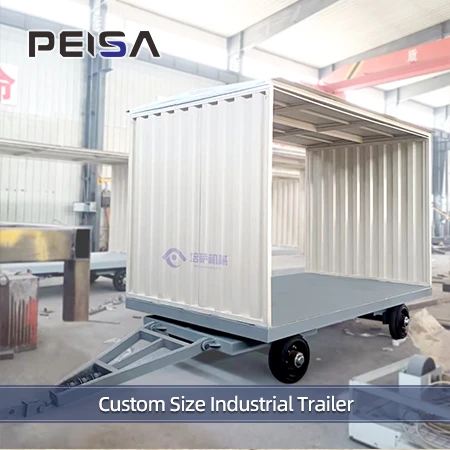
Now, let's talk about Unpowered Industrial Trailers. These trailers don't have their own power source, so they don't produce any direct emissions. However, they are often towed by powered vehicles, which may have emissions.
When it comes to choosing a towing vehicle for an unpowered trailer, it's important to consider the emission standards of the towing vehicle. By pairing an unpowered trailer with a low - emission towing vehicle, you can reduce the overall environmental impact of your industrial transport operations.
The Impact of Emission Standards on the Industrial Vehicle Industry
Emission standards have had a significant impact on the industrial vehicle industry. On the one hand, they've forced manufacturers to invest in research and development to come up with cleaner and more efficient technologies. This has led to the development of new engine designs, alternative fuels, and electric vehicle technologies.
On the other hand, these standards have also increased the cost of manufacturing industrial vehicles. The new technologies and components needed to meet the standards can be expensive, and these costs are often passed on to the customers. However, in the long run, the benefits of reduced emissions and improved air quality outweigh the higher upfront costs.
As a supplier, we understand the challenges that our customers face when it comes to meeting emission standards. That's why we offer a wide range of vehicles that are compliant with the latest regulations. We also provide support and advice to help our customers make the right choices for their businesses.
Why You Should Choose Our Industrial Vehicles
When you're in the market for industrial vehicles, there are a few reasons why you should consider choosing our products. First of all, we're committed to providing high - quality vehicles that meet or exceed the latest emission standards. Whether you need an electric platform truck, a diesel - powered vehicle, or an unpowered trailer, we've got you covered.
Secondly, our vehicles are designed for durability and reliability. We know that in an industrial setting, downtime can be costly, so we make sure that our vehicles are built to last. And if you ever have any issues with your vehicle, our customer support team is always ready to help.
Finally, we offer competitive pricing. We understand that cost is an important factor when making a purchasing decision, so we strive to offer the best value for your money.
Let's Talk!
If you're interested in learning more about our industrial vehicles or have any questions about emission standards, don't hesitate to reach out. We're here to help you find the right vehicles for your business needs and ensure that you're compliant with all the relevant regulations. Whether you're a small business or a large industrial operation, we've got the solutions for you. So, let's start a conversation and see how we can work together to make your industrial transport more efficient and environmentally friendly.
References
- Environmental Protection Agency (EPA). Regulations for Diesel Engines.
- International Organization for Standardization (ISO). Standards for Industrial Vehicle Emissions.
- Industrial Vehicle Manufacturers Association. Industry Reports on Emission Standards and Their Impact.