

Can a mold transfer cart be used for transporting molds in a narrow space?
As a supplier of mold transfer carts, I often encounter inquiries from customers regarding the suitability of our products for transporting molds in narrow spaces. This is a crucial question, especially for industries where floor space is at a premium and efficient mold handling is essential. In this blog post, I will delve into the capabilities of mold transfer carts in narrow spaces, exploring their features, limitations, and how they can be optimized for such environments.
Understanding the Challenges of Narrow Spaces
Narrow spaces present a unique set of challenges when it comes to mold transportation. These areas may have limited clearance, sharp turns, and restricted access points, making it difficult to maneuver large or bulky equipment. Additionally, the risk of collisions with walls, machinery, or other obstacles is significantly higher in narrow spaces, which can damage the molds and the transfer cart itself.
Features of Mold Transfer Carts that Make Them Suitable for Narrow Spaces
Despite these challenges, mold transfer carts are designed with several features that make them well-suited for use in narrow spaces. Here are some of the key features:
-
Compact Design
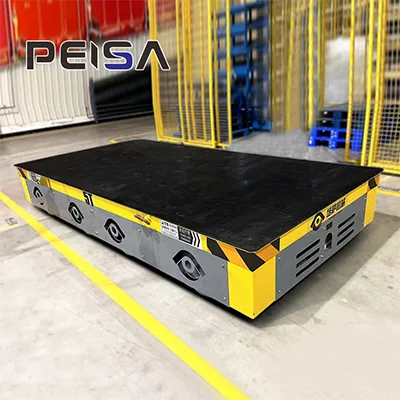
Mold transfer carts are available in a variety of sizes and configurations, including compact models that are specifically designed for use in tight spaces. These carts typically have a low profile and a narrow footprint, allowing them to navigate through narrow aisles and doorways with ease. -
Precise Maneuverability
Many mold transfer carts are equipped with advanced steering systems that provide precise control and maneuverability. These systems may include features such as four-wheel steering, crab steering, or omnidirectional movement, which allow the cart to turn in tight circles and move in any direction. This makes it easier to navigate through narrow spaces and position the cart accurately for loading and unloading molds. -
Safety Features
Safety is a top priority when transporting molds in narrow spaces. Mold transfer carts are typically equipped with a range of safety features, such as collision sensors, emergency stop buttons, and warning lights, to prevent accidents and protect the operators and the equipment. These features help to minimize the risk of collisions and ensure that the cart can operate safely in confined areas. -
Customization Options
At our company, we understand that every customer's needs are unique. That's why we offer a wide range of customization options for our mold transfer carts, allowing us to tailor the cart to the specific requirements of your narrow space. We can customize the size, shape, and configuration of the cart, as well as the type of steering system, power source, and safety features. This ensures that you get a cart that is perfectly suited for your needs and can operate efficiently in your narrow space.
Limitations of Mold Transfer Carts in Narrow Spaces
While mold transfer carts are designed to be versatile and adaptable, there are some limitations to their use in narrow spaces. Here are some of the key limitations:
-
Load Capacity
The load capacity of a mold transfer cart is typically limited by its size and design. In narrow spaces, it may be necessary to use a smaller cart with a lower load capacity to ensure that it can maneuver safely. This means that you may need to make multiple trips to transport larger molds, which can increase the time and cost of the transportation process. -
Turning Radius
Even with advanced steering systems, mold transfer carts have a minimum turning radius that must be considered when operating in narrow spaces. If the space is too narrow or the turns are too sharp, the cart may not be able to turn safely, which can lead to collisions or other accidents. -
Clearance Requirements
Mold transfer carts require a certain amount of clearance around them to operate safely. In narrow spaces, it may be difficult to provide this clearance, which can increase the risk of collisions with walls, machinery, or other obstacles.
Optimizing Mold Transfer Carts for Use in Narrow Spaces
To overcome these limitations and ensure that your mold transfer cart can operate efficiently in narrow spaces, it is important to optimize the cart for the specific requirements of your environment. Here are some tips for optimizing your mold transfer cart for use in narrow spaces:

-
Choose the Right Cart
The first step in optimizing your mold transfer cart for use in narrow spaces is to choose the right cart for the job. Consider the size, shape, and configuration of the space, as well as the weight and dimensions of the molds you need to transport. Choose a cart that is compact, maneuverable, and has the appropriate load capacity for your needs. -
Customize the Cart
As mentioned earlier, customization is key when it comes to using a mold transfer cart in narrow spaces. Work with your supplier to customize the cart to the specific requirements of your environment. This may include features such as a smaller size, a narrower footprint, a more precise steering system, or additional safety features. -
Plan the Route
Before using the mold transfer cart in a narrow space, it is important to plan the route carefully. Identify any potential obstacles or hazards, such as walls, machinery, or other equipment, and plan a route that avoids these obstacles. Consider the turning radius of the cart and make sure that there is enough clearance around the cart to operate safely. -
Train the Operators
Proper training is essential for ensuring that the mold transfer cart is operated safely and efficiently in narrow spaces. Make sure that all operators are trained on the specific features and capabilities of the cart, as well as the safety procedures and protocols for operating the cart in narrow spaces. Provide regular refresher training to ensure that operators are up-to-date on the latest safety practices and procedures.
Conclusion
In conclusion, mold transfer carts can be used for transporting molds in narrow spaces, but it is important to choose the right cart, customize it to the specific requirements of your environment, plan the route carefully, and train the operators properly. By following these tips, you can ensure that your mold transfer cart can operate safely and efficiently in narrow spaces, helping you to improve productivity, reduce costs, and protect your valuable molds.
If you are interested in learning more about our Die Transfer Cart, Material Transfer Carts, or Heavy Duty Mold Transfer Trolley, please contact us today. Our team of experts will be happy to answer your questions and help you find the right solution for your needs.
References
- Industry standards and guidelines for mold handling and transportation
- Manufacturer's specifications and documentation for mold transfer carts
- Case studies and best practices from companies that have successfully used mold transfer carts in narrow spaces