

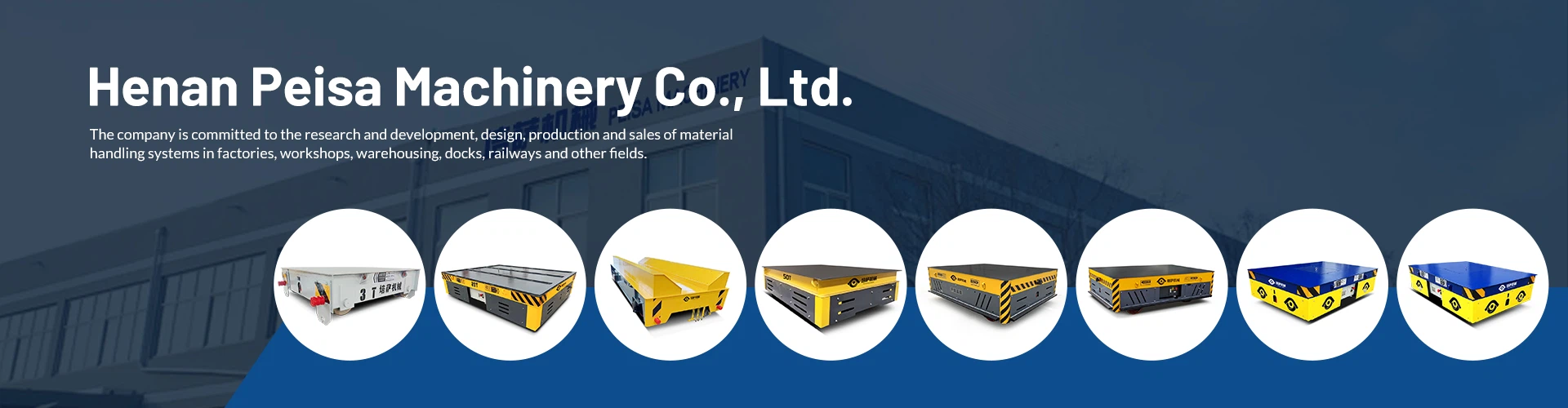

Electric transfer cart are widely used in modern material handling, and lead-acid and lithium-ion batteries are two common choices for their power supply configurations. They differ in performance, cost, and maintenance. Let's take a look at their characteristics.

| Item | Lithium Battery | Lead-Acid Battery |
|---|---|---|
| Initial Cost | Higher purchase cost | Lower purchase cost |
| Recycling Value | Limited recycling value and more complex recycling process | Mature recycling system with high recycling rate |
| Size & Weight | Compact size and lighter weight | Larger size and heavier weight |
| Energy Density | Higher energy density, stores more power in a smaller space | Lower energy density |
| Maintenance | Maintenance-free during normal operation | Requires regular inspection and electrolyte maintenance |
| Charging Efficiency | Faster charging and higher efficiency | Slower charging and lower efficiency |
| Service Life | Longer cycle life, typically 2–4 times that of lead-acid batteries | Shorter cycle life |
| Depth of Discharge | Can operate at deeper discharge levels without significant damage | Frequent deep discharge reduces battery life |
| Operating Performance | Stable voltage output and consistent performance | Voltage drops gradually as battery charge decreases |
| Installation Space | Ideal for compact and low-profile transfer carts | Requires more installation space |
| Environmental Impact | No liquid electrolyte leakage during normal use | Risk of acid leakage if damaged or improperly maintained |
| Suitable Applications | Compact transfer carts, high-frequency operation, automated equipment | Heavy-duty transfer carts, cost-sensitive projects, standard industrial applications |
First, lead-acid batteries. These batteries use traditional lead-acid technology and have the advantage of being relatively inexpensive. They have a long lifespan and high charging efficiency, making them suitable for scenarios that require frequent and prolonged use. However, lead-acid batteries are relatively heavy, which increases the overall weight and energy consumption of the cart. Furthermore, lead-acid batteries release gas during charging and discharging, requiring ventilation.
Lithium-ion batteries, on the other hand, use a newer battery technology that employs lithium salts as the positive and negative electrode materials. Lithium-ion batteries have higher energy density and a smaller size. For the same capacity, lithium-ion batteries are lighter than lead-acid batteries, reducing the weight of the Electric Platform transfer cart and improving its efficiency.
Lithium-ion batteries also have higher discharge efficiency and a lower self-discharge rate, providing shorter charging times and longer lifespans. However, lithium batteries are relatively expensive, and temperature control is crucial during charging and discharging to avoid overheating and safety issues.

In terms of maintenance, lead-acid batteries (except for maintenance-free models) require regular checks and the addition of distilled water to maintain the battery level. Lithium-ion batteries, on the other hand, are much less demanding, requiring no additional maintenance; typically, only regular checks of the battery charge and temperature are needed.
In general, the choice between lead-acid and lithium-ion batteries depends on actual needs and budget. If cost is a lower concern and the operating environment is well-ventilated, lead-acid batteries are a good choice. Conversely, if the goal is to reduce the weight of the transfer cart, improve efficiency, and afford the higher cost, then lithium-ion batteries are a better option.
Furthermore, lithium-ion batteries are more expensive in export projects because they are classified as hazardous materials, requiring product certification and strict export procedures, which is another reason for choosing lead-acid batteries.