

Hey there! As a supplier of Hydraulic Transfer Carts, I often get asked about the turning radius of these nifty machines. So, I thought I'd dive deep into this topic and share everything you need to know.
First off, let's understand what a turning radius is. In simple terms, the turning radius of a Hydraulic Transfer Cart is the minimum radius of the circle it needs to make a complete turn. It's a crucial factor, especially when you're working in tight spaces or need to maneuver the cart around obstacles.
The turning radius of a Hydraulic Transfer Cart can vary widely depending on several factors. One of the main factors is the design of the cart itself. Some carts are designed with a more compact structure, which allows for a smaller turning radius. On the other hand, larger carts with more complex configurations may have a larger turning radius.
Another important factor is the type of wheels and steering mechanism used. Carts with specialized wheels and advanced steering systems can often achieve a smaller turning radius. For example, some Hydraulic Transfer Carts are equipped with omni - wheels or mecanum wheels, which provide greater flexibility in movement and can significantly reduce the turning radius.
Let's talk about the different types of Hydraulic Transfer Carts and how their turning radii might differ.
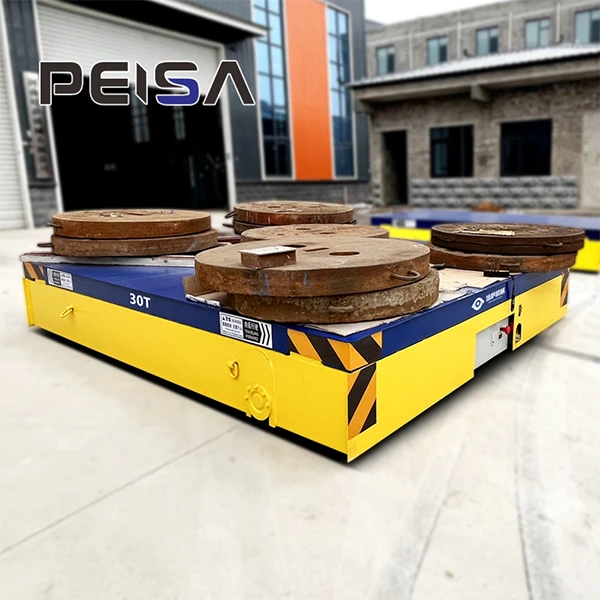
Battery Hydraulic Transfer Cart
The Battery Hydraulic Transfer Cart is a popular choice for many industries. These carts are powered by batteries, which gives them the advantage of being more flexible in terms of movement. They can be used in areas where there's no access to a power grid.
The turning radius of a Battery Hydraulic Transfer Cart can be relatively small, especially if it's designed for indoor use. Indoor models often need to navigate through narrow aisles and around equipment, so they are usually engineered to have a tight turning radius. However, larger outdoor - oriented Battery Hydraulic Transfer Carts may have a larger turning radius due to their size and the need to carry heavier loads.
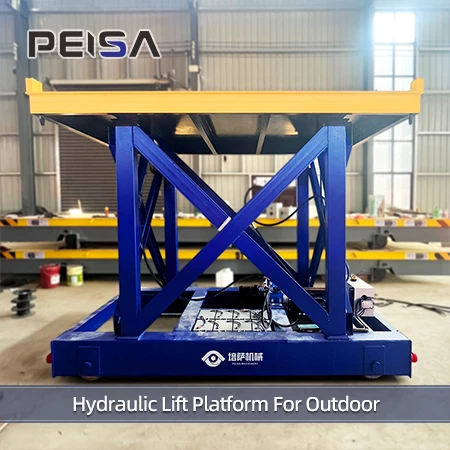
Lifting Transfer Cart
Lifting Transfer Carts are used when you need to lift and transport heavy objects. These carts come with a lifting mechanism, which adds an extra layer of complexity to their design.
The turning radius of a Lifting Transfer Cart can be affected by the position of the load and the lifting mechanism. When the load is lifted, the center of gravity of the cart changes, which can impact its maneuverability. Generally, these carts may have a slightly larger turning radius compared to non - lifting carts, but modern designs are constantly improving to reduce this difference.
Hydraulic Transfer Trolley
The Hydraulic Transfer Trolley is another type of Hydraulic Transfer Cart. Trolleys are often used for lighter loads and in more confined spaces.
These trolleys typically have a smaller turning radius because of their smaller size and simpler design. They are easy to handle and can be quickly maneuvered around corners and through small spaces.
Now, why is the turning radius so important? Well, in a busy industrial environment, space is often at a premium. A cart with a small turning radius can save a lot of space and increase efficiency. It allows for quicker movement of goods, reduces the risk of collisions with other equipment or structures, and can even improve the overall safety of the workplace.
For example, in a warehouse where there are narrow aisles between racks, a cart with a large turning radius may struggle to navigate through. This can lead to delays in moving goods and potentially cause damage to the racks or the cart itself. On the other hand, a cart with a small turning radius can easily zip through these narrow spaces, getting the job done faster and more safely.
If you're in the market for a Hydraulic Transfer Cart, it's essential to consider your specific needs. Think about the space where the cart will be used, the type and weight of the loads it will carry, and the frequency of movement.
If you have a small - scale operation with limited space, a cart with a small turning radius, like a Hydraulic Transfer Trolley, might be the best choice. For larger operations where heavier loads need to be transported, you may need to look at a Battery Hydraulic Transfer Cart or a Lifting Transfer Cart, but make sure to pay attention to the turning radius specifications.
At our company, we offer a wide range of Hydraulic Transfer Carts with different turning radii to suit various needs. Our team of experts can help you choose the right cart for your specific requirements. Whether you need a cart for a small workshop or a large industrial facility, we've got you covered.
If you're interested in learning more about our Hydraulic Transfer Carts or have any questions regarding the turning radius or other features, don't hesitate to reach out. We're always happy to have a chat and discuss how our products can benefit your business. Contact us today to start the conversation about finding the perfect Hydraulic Transfer Cart for you.
References
- Industrial Material Handling Equipment Handbook
- Hydraulic System Design and Applications Guide