

What is the steering mechanism of a custom transfer cart?
As a supplier of custom transfer carts, I've witnessed firsthand the diverse needs and applications of these remarkable vehicles. One critical aspect that often comes under the spotlight is the steering mechanism. Understanding the steering mechanism of a custom transfer cart is essential for ensuring its efficiency, maneuverability, and safety in various industrial settings. In this blog post, we'll delve into the different types of steering mechanisms employed in custom transfer carts and explore their advantages and limitations.
Types of Steering Mechanisms
1. Manual Steering
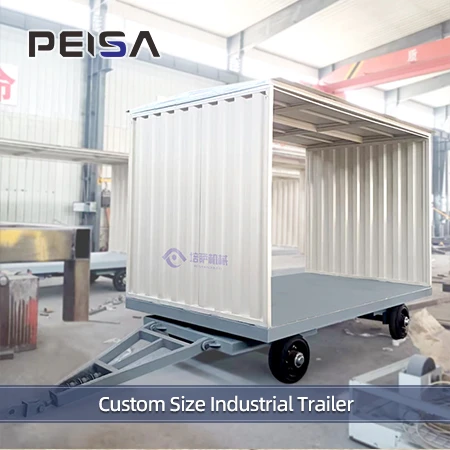
Manual steering is the most basic and straightforward steering mechanism. It relies on the operator's physical effort to turn the wheels of the transfer cart. This type of steering is commonly found in smaller, lighter custom transfer carts, such as the Unpowered Industrial Trailer.
The simplicity of manual steering is its greatest advantage. It is inexpensive, easy to maintain, and doesn't require complex electrical or hydraulic systems. However, it also has its limitations. Manual steering can be physically demanding, especially for larger or heavier loads, and it may not be suitable for applications that require frequent or precise turns.
2. Electric Power Steering
Electric power steering (EPS) has become increasingly popular in recent years, thanks to its numerous benefits. EPS uses an electric motor to assist the operator in turning the wheels, reducing the physical effort required. This makes it ideal for custom transfer carts that need to handle heavy loads or operate in tight spaces.
One of the key advantages of EPS is its energy efficiency. Unlike hydraulic power steering systems, which consume a significant amount of energy even when not in use, EPS only draws power when the steering wheel is turned. This results in lower energy consumption and reduced operating costs. Additionally, EPS offers better control and precision, allowing for smoother and more accurate turns.
Our 2 Tons Electric Platform Truck is equipped with an advanced EPS system, providing operators with effortless steering and enhanced maneuverability. Whether you're transporting heavy equipment in a warehouse or navigating through narrow aisles, the EPS system ensures a seamless and efficient operation.
3. Hydraulic Power Steering
Hydraulic power steering (HPS) is another common steering mechanism used in custom transfer carts. HPS uses a hydraulic pump to generate pressure, which is then used to assist the operator in turning the wheels. This type of steering is known for its high power and reliability, making it suitable for heavy-duty applications.
One of the main advantages of HPS is its ability to handle large loads with ease. The hydraulic system provides a significant amount of power, allowing for smooth and effortless steering even under heavy load conditions. Additionally, HPS is highly responsive and can provide precise control, making it ideal for applications that require accurate maneuvering.
However, HPS also has some drawbacks. It is more complex and expensive than manual or electric power steering systems, and it requires regular maintenance to ensure optimal performance. The hydraulic fluid used in the system also needs to be changed periodically, which can add to the operating costs.
4. Articulated Steering
Articulated steering is a unique steering mechanism that allows the transfer cart to bend at a central pivot point. This type of steering is commonly used in large, heavy-duty custom transfer carts, such as the Unpowered Trailer, where maneuverability is a key concern.
The main advantage of articulated steering is its excellent turning radius. By bending at the pivot point, the transfer cart can make sharp turns in tight spaces, which is not possible with other steering mechanisms. This makes it ideal for applications that require frequent or sharp turns, such as in a narrow warehouse aisle or on a congested factory floor.
However, articulated steering also has some limitations. It is more complex and expensive to design and manufacture than other steering mechanisms, and it requires careful maintenance to ensure proper functioning. Additionally, the articulation joint can be a potential weak point, requiring regular inspection and lubrication to prevent wear and tear.

Factors to Consider When Choosing a Steering Mechanism
When choosing a steering mechanism for a custom transfer cart, several factors need to be considered, including the load capacity, operating environment, and the frequency and type of turns required.
- Load Capacity: The weight of the load that the transfer cart needs to carry is a crucial factor in determining the appropriate steering mechanism. For lighter loads, manual or electric power steering may be sufficient, while heavier loads may require hydraulic power steering or articulated steering.
- Operating Environment: The operating environment also plays a significant role in the choice of steering mechanism. If the transfer cart will be operating in a tight or congested space, a steering mechanism with a small turning radius, such as articulated steering or electric power steering, may be more suitable. On the other hand, if the transfer cart will be operating in a large, open area, manual or hydraulic power steering may be a better choice.
- Frequency and Type of Turns: The frequency and type of turns that the transfer cart needs to make are also important considerations. If the transfer cart will be making frequent or sharp turns, a steering mechanism that offers high precision and control, such as electric power steering or articulated steering, may be necessary. If the turns are less frequent and more gradual, manual or hydraulic power steering may be sufficient.
Conclusion
The steering mechanism is a critical component of a custom transfer cart, and choosing the right one is essential for ensuring its performance, efficiency, and safety. Whether you're looking for a simple and economical manual steering system or a high-tech electric or hydraulic power steering system, there is a solution available to meet your specific needs.
As a leading supplier of custom transfer carts, we offer a wide range of steering mechanisms to suit different applications and requirements. Our experienced team of engineers can work with you to design and build a custom transfer cart that meets your exact specifications, including the choice of steering mechanism.
If you're interested in learning more about our custom transfer carts or have any questions about steering mechanisms, please don't hesitate to contact us. We'd be happy to help you find the perfect solution for your industrial transportation needs.
References
- Smith, J. (2020). Industrial Material Handling Equipment: A Comprehensive Guide. Publisher Name.
- Johnson, M. (2019). Steering Systems for Heavy-Duty Vehicles. Journal of Vehicle Engineering, 15(2), 123-135.