

Hey there! As a supplier of Ferry Transfer Carts, I often get asked about the maximum acceleration of these nifty machines. So, I thought I'd take a deep dive into this topic and share what I've learned over the years.
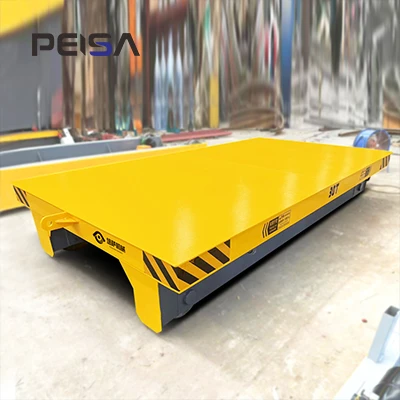
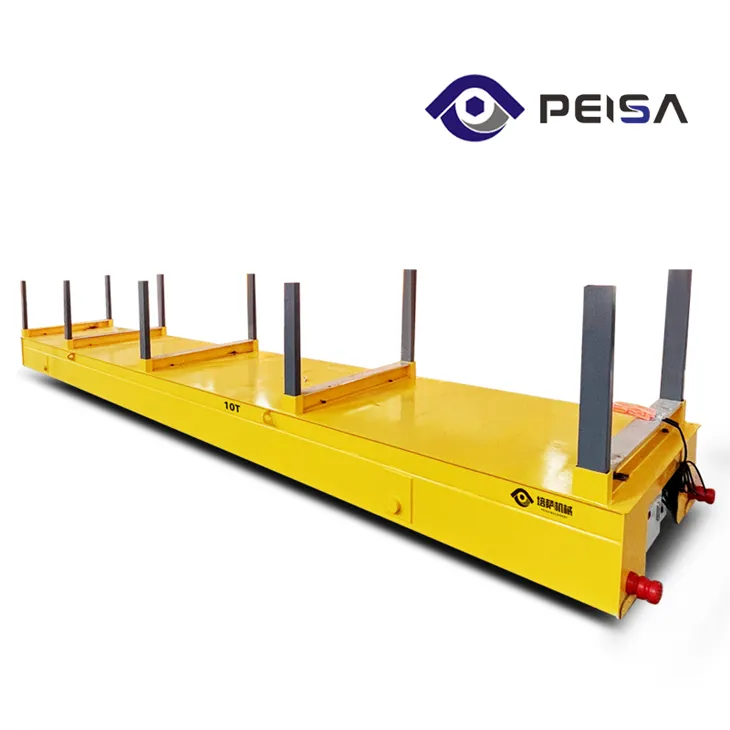
First off, let's understand what a Ferry Transfer Cart is. It's a type of industrial vehicle used to move heavy loads across a factory floor or between different workstations. These carts are incredibly versatile and can be customized to fit various needs. Whether it's a Transfer Cart For Steel Plant or an Equipment Transfer Cart, they play a crucial role in streamlining operations.
Now, when it comes to the maximum acceleration of a Ferry Transfer Cart, there are several factors at play. One of the most significant factors is the power source. Most Ferry Transfer Carts are powered by electricity, either through a battery or a rail-powered system. The power output of the motor directly affects the acceleration capabilities of the cart.
Let's start with battery-powered carts. These are great for applications where mobility and flexibility are key. The battery provides the energy needed to drive the motor, which in turn propels the cart forward. The maximum acceleration of a battery-powered Ferry Transfer Cart depends on the capacity and voltage of the battery, as well as the efficiency of the motor.
Typically, a well-designed battery-powered cart can achieve an acceleration of around 0.1 to 0.3 meters per second squared. This might not sound like much, but when you're dealing with heavy loads, a smooth and controlled acceleration is essential to prevent damage to the cargo and ensure the safety of the operators.
On the other hand, rail-powered Ferry Transfer Carts offer a different set of advantages. These carts are connected to a power rail, which provides a continuous supply of electricity. This allows for more consistent power delivery and potentially higher acceleration rates.
Rail-powered carts can often achieve accelerations of up to 0.5 meters per second squared or even higher, depending on the design and specifications. The key advantage of rail-powered carts is their ability to handle heavier loads with greater ease. The continuous power supply ensures that the motor can maintain a consistent level of performance, even under heavy loads.
Another factor that affects the maximum acceleration of a Ferry Transfer Cart is the load capacity. Obviously, a cart carrying a heavier load will require more power to accelerate compared to an empty cart. This is because of Newton's second law of motion, which states that the force required to accelerate an object is directly proportional to its mass.
For example, if you have a Ferry Transfer Cart with a load capacity of 10 tons, it will need more power to accelerate than a cart with a 1-ton capacity. As a supplier, we always take the load capacity into account when designing and configuring the cart's power system to ensure optimal performance.
The design of the cart's wheels and brakes also plays a role in determining the maximum acceleration. High-quality wheels with good traction can provide better grip on the surface, allowing the cart to accelerate more efficiently. Similarly, well-designed brakes are essential for controlling the acceleration and ensuring safe operation.
In addition to these technical factors, the operating environment can also impact the maximum acceleration of a Ferry Transfer Cart. For instance, if the cart is operating on a rough or uneven surface, it may experience more resistance, which can reduce its acceleration capabilities. On the other hand, a smooth and level surface will allow the cart to accelerate more smoothly.
Now that we've covered the factors that affect the maximum acceleration of a Ferry Transfer Cart, let's talk about why it's important. Acceleration is not just about how fast the cart can go; it's also about how quickly it can reach its desired speed and how efficiently it can operate.
A cart with a higher acceleration can reduce the time it takes to move loads from one point to another, which can significantly improve productivity. This is especially important in industries where time is of the essence, such as manufacturing and logistics.
Moreover, a well-designed acceleration system can also help to reduce wear and tear on the cart's components. By gradually increasing the speed, rather than applying sudden bursts of power, the cart's motor, wheels, and brakes are subjected to less stress, which can extend their lifespan and reduce maintenance costs.
At our company, we understand the importance of optimizing the acceleration of our Ferry Transfer Carts. That's why we work closely with our customers to understand their specific needs and requirements. Whether you're looking for a Transfer Cart For Steel Plant or an Equipment Transfer Cart, we can customize the cart's power system, load capacity, and other specifications to ensure maximum performance.
If you're in the market for a Ferry Transfer Cart and want to learn more about the maximum acceleration and how it can benefit your business, don't hesitate to get in touch. We're always happy to answer your questions and provide you with a free consultation. Let's work together to find the perfect solution for your industrial transportation needs.
Contact us today to discuss your requirements and take the first step towards improving your operations with our high-quality Rail Transfer Cart Equipment.
References
- Newton, Isaac. "Philosophiæ Naturalis Principia Mathematica." London, 1687.
- Engineering textbooks on industrial vehicle design and electric motor systems.