

Hey there! I'm an industrial vehicles supplier, and today we're gonna talk about a super important topic: speed limits for industrial vehicles in a factory.
First off, why do we even need speed limits in factories? Well, safety's the top reason. Factories are busy places with lots of workers moving around, and there's often heavy equipment and valuable goods. If industrial vehicles are zooming around at high speeds, it can be a recipe for disaster. Accidents can lead to injuries, damage to property, and even downtime for the factory, which can cost a ton of money.
Let's take a closer look at different types of industrial vehicles and what kind of speed limits might make sense for them.
Towed Transfer Cart
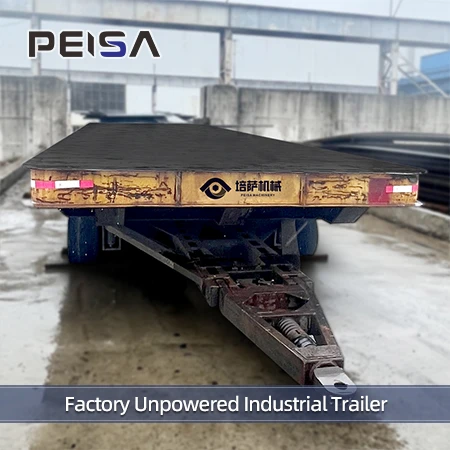
The Towed Transfer Cart is a common sight in many factories. These carts are usually pulled by a tractor or other towing vehicle and are used to move large loads from one place to another. Because they're often carrying heavy items, it's crucial to keep their speed in check.
In general, a speed limit of around 3 - 5 miles per hour (mph) is a good idea for towed transfer carts. This slow speed allows the operator of the towing vehicle to have better control, especially when starting and stopping. It also gives other workers in the area enough time to react if the cart is approaching. If the cart is moving too fast, it can be difficult to stop quickly, especially if the load is uneven or heavy. And a sudden stop at high speed could cause the load to shift or even fall off, creating a dangerous situation for everyone nearby.
Electric Trolley Carrier with Steering Wheel
The Electric Trolley Carrier with Steering Wheel offers more maneuverability compared to towed transfer carts. These carriers are often used for more precise movements within the factory, like moving materials to specific workstations.
For electric trolley carriers with steering wheels, a speed limit of 5 - 8 mph is usually appropriate. The higher speed is possible because these carriers are more agile and can be stopped relatively quickly. However, it's still important not to go too fast. The ability to steer means that the operator might need to make sudden turns, and a high speed could result in the carrier tipping over. Also, speeding can make it harder to avoid collisions with other vehicles or workers in the narrow aisles of a factory.
Electric Trolley Carrier
The Electric Trolley Carrier is another popular option in factories. These carriers are similar to the ones with steering wheels but might have different features and capabilities depending on the manufacturer.

A speed limit of 4 - 7 mph is generally a good range for electric trolley carriers. They're designed to be efficient and move materials around the factory, but safety should always be the priority. Just like with other industrial vehicles, a slower speed gives the operator more time to respond to unexpected situations. It also reduces the risk of damage to the carrier itself and the materials it's transporting.
Factors Affecting Speed Limits
It's not just the type of vehicle that determines the speed limit. There are several other factors that factories need to consider when setting speed limits for their industrial vehicles.
- Floor Conditions: If the factory floor is smooth and in good condition, vehicles can generally move a bit faster. But if the floor is rough, uneven, or has debris on it, a lower speed limit is necessary to prevent the vehicle from losing control or causing damage to the load.
- Traffic Density: In areas of the factory where there's a lot of vehicle and pedestrian traffic, a lower speed limit is crucial. This gives everyone enough space and time to avoid collisions. For example, near the entrance or exit of a storage area, where lots of vehicles are coming and going, speeds should be kept low.
- Load Characteristics: The size, weight, and shape of the load being carried also matter. A large, bulky load might make the vehicle less stable, so a slower speed is needed. Additionally, if the load is fragile or valuable, a lower speed can help prevent damage during transportation.
Implementing and Enforcing Speed Limits
Once a factory has determined the appropriate speed limits for its industrial vehicles, it's important to implement and enforce them.
- Training: All vehicle operators should receive proper training on the speed limits and the reasons behind them. This training should include information on how speed affects safety, as well as practical demonstrations of how to operate the vehicle within the speed limits.
- Signage: Clear signage should be posted throughout the factory to indicate the speed limits in different areas. These signs should be visible and easy to understand.
- Monitoring: Factories can use technology like speed sensors and cameras to monitor the speed of industrial vehicles. If a vehicle is found to be exceeding the speed limit, appropriate disciplinary action can be taken.
Why Choose Our Industrial Vehicles?
As an industrial vehicles supplier, we understand the importance of safety and performance. Our vehicles are designed to meet the highest standards of quality and reliability. They're built with advanced safety features that help operators stay within the speed limits and avoid accidents.
For example, our towed transfer carts are equipped with braking systems that are designed to handle heavy loads and stop the vehicle quickly and safely. Our electric trolley carriers with steering wheels are easy to maneuver, even at low speeds, which makes them ideal for use in busy factory environments.
If you're in the market for industrial vehicles, we'd love to talk to you. Whether you need a towed transfer cart, an electric trolley carrier with steering wheel, or an electric trolley carrier, we have the right solution for you. Our team of experts can help you choose the best vehicle for your specific needs and provide you with all the support you need to keep your factory running smoothly.
If you're interested in learning more about our products or have any questions about industrial vehicle speed limits, don't hesitate to reach out. You can contact us to start a conversation about how we can help you improve the safety and efficiency of your factory operations.
References
- Workplace Safety and Health Act. (Year of publication). Retrieved from relevant government regulatory website.
- Industrial Vehicle Safety Guidelines. (Year of publication). By [Author or Organization].