

Hey there! As a supplier of Coil Rail Transfer Carts, I often get asked if these nifty machines are suitable for low - temperature environments. Well, let's dig into this topic and find out.
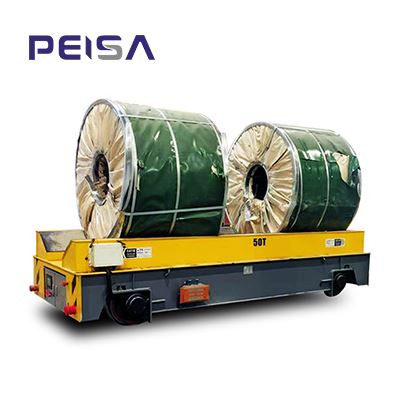
First off, let's understand what Coil Rail Transfer Carts are. These carts are designed to move heavy coils along a rail system. They're a staple in industries like steel manufacturing, warehousing, and logistics. They come in different types, such as the Battery Operated Transfer Car, which runs on a battery power source, and the Coil Transfer Carts, which can have various configurations to suit different needs.
Now, when it comes to low - temperature environments, there are a few factors we need to consider.
Battery Performance
Most Coil Rail Transfer Carts, especially the Battery Operated Transfer Trolley, rely on batteries for power. Batteries are sensitive to temperature. In low - temperature conditions, the chemical reactions inside the battery slow down. This means that the battery's capacity to hold a charge and deliver power decreases. For example, lead - acid batteries, which are commonly used in some transfer carts, can lose a significant amount of their capacity when the temperature drops below freezing.
Let's say you have a cart that can run for 8 hours on a full charge at room temperature. In a low - temperature environment, that runtime could be cut in half or even more. This can be a major issue if your operations rely on the continuous movement of coils.
Lubrication
Lubricants are essential for the smooth operation of the moving parts in a Coil Rail Transfer Cart. In low - temperature environments, lubricants can thicken. When lubricants thicken, they don't flow as easily, which can lead to increased friction between the moving parts. This increased friction can cause wear and tear on the components, reducing the lifespan of the cart. It can also make the cart less efficient, as more energy is needed to overcome the friction.
Material Properties
The materials used in the construction of the Coil Rail Transfer Cart can also be affected by low temperatures. Metals, for example, can become more brittle in cold conditions. This means that they are more likely to crack or break under stress. If a crucial part of the cart, like a frame or a wheel, becomes brittle and fails, it can lead to a breakdown of the cart and disrupt your operations.
Solutions for Low - Temperature Use
But don't worry! There are ways to make Coil Rail Transfer Carts suitable for low - temperature environments.

Battery Heating Systems
One solution for the battery issue is to install a battery heating system. This system keeps the battery at an optimal temperature, ensuring that it can maintain its capacity and deliver power efficiently. There are different types of battery heating systems available, such as electric heating pads or fluid - based heating systems.
Special Lubricants
Using special lubricants designed for low - temperature use can help solve the lubrication problem. These lubricants are formulated to maintain their viscosity and flow properties even in cold conditions. They can ensure that the moving parts of the cart continue to operate smoothly.
Cold - Resistant Materials
When it comes to the materials used in the cart's construction, choosing cold - resistant materials can prevent brittleness. For example, some alloys are designed to maintain their toughness and strength in low - temperature environments. Using these materials in critical components of the cart can increase its reliability in cold conditions.
Real - World Examples
I've had customers in cold regions, like northern Canada and Russia, who were initially skeptical about using Coil Rail Transfer Carts in their low - temperature facilities. But after implementing the solutions I mentioned above, they've been very satisfied with the performance of the carts.
One customer in a steel mill in northern Canada was using a Battery Operated Transfer Car to move coils between different processing areas. They installed a battery heating system and switched to low - temperature lubricants. As a result, the cart's runtime increased, and the maintenance costs decreased significantly.
Conclusion
So, is a Coil Rail Transfer Cart suitable for low - temperature environments? The answer is yes, but with some modifications. By addressing the issues related to battery performance, lubrication, and material properties, these carts can operate effectively in cold conditions.
If you're considering using Coil Rail Transfer Carts in a low - temperature environment, I'd be more than happy to help you find the right solutions for your specific needs. Whether it's choosing the right battery heating system, the appropriate lubricants, or the best cold - resistant materials, I've got the expertise to guide you through the process. Feel free to reach out to me to start a discussion about your requirements and how we can make these carts work for you in the cold.
References
- Battery Technology Handbook: Covers the effects of temperature on battery performance.
- Lubrication Engineering Manual: Discusses the properties of lubricants in different temperature conditions.
- Materials Science for Engineering: Explains the behavior of materials at low temperatures.