

In the realm of industrial material handling, the question of whether an AGV rail transfer cart can be used for transporting liquid goods is both relevant and complex. As a supplier of AGV rail transfer carts, I am often confronted with this query from potential customers. In this blog, we will delve into the technical, practical, and safety aspects to provide a comprehensive answer.
Technical Feasibility
AGV rail transfer carts are designed to operate on fixed rails, guided by automated systems to transport various types of goods. Mechanically, they can be configured to carry the weight and volume of liquid containers. These carts come in different load - bearing capacities, from a few hundred kilograms to several tens of tons. For transporting liquid goods, the key lies in the cart's ability to handle the dynamic forces exerted by the liquid, such as sloshing.
Sloshing occurs when the liquid in a container moves back and forth due to the cart's acceleration, deceleration, or turning. To counter this, the cart's structure needs to be engineered with sufficient stability. Special shock - absorbing systems and buffer mechanisms can be incorporated to reduce the impact of sloshing on the cart's movement and overall stability. Additionally, the suspension system of the cart plays a crucial role. A well - designed suspension can adjust to the changing center of gravity caused by the movement of the liquid, ensuring smooth and safe transportation.
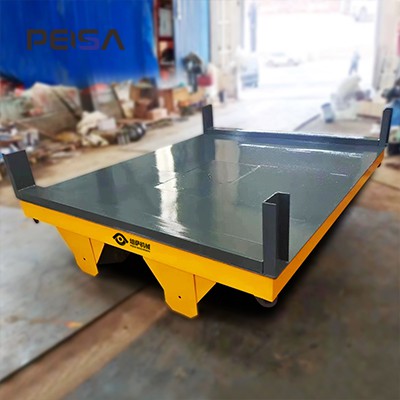
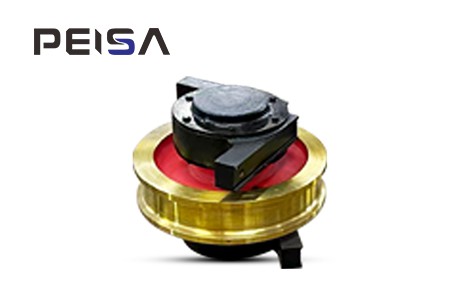
The power system of an AGV rail transfer cart also matters. Electric AGV rail transfer carts are a popular choice as they can provide precise speed control. This is essential when transporting liquids, as sudden changes in speed can exacerbate sloshing. By maintaining a consistent and gentle acceleration and deceleration rate, the risk of liquid spillage can be significantly reduced.
Safety Considerations
Safety is of paramount importance when it comes to transporting liquid goods. Firstly, the liquid containers need to be firmly secured on the cart. This can be achieved through custom - designed fixtures and restraining devices. For example, for drums or barrels, clamps and straps can be used to prevent them from rolling or shifting during transit.
In the event of a spill, the AGV rail transfer cart should be equipped with appropriate spill - containment measures. This may include a spill - proof tray beneath the containers, made of a material that is resistant to the chemical properties of the liquid being transported. For hazardous liquids, the cart should also meet strict safety standards, such as having explosion - proof components to prevent the risk of ignition in case of a leak.
Moreover, the AGV system should have built - in sensors to detect any abnormal conditions, such as liquid leakage. Once a leak is detected, the cart can be programmed to stop immediately, and an alarm can be triggered to alert the relevant personnel. This ensures that any potential safety hazards are addressed promptly.
Compatibility with Liquid Types
Not all liquids are the same, and the compatibility between the AGV rail transfer cart and the liquid being transported is a critical factor. Different liquids have different viscosities, densities, and chemical properties. For example, water is a relatively low - viscosity and non - corrosive liquid, making it relatively easy to transport. However, corrosive liquids such as acids and alkalis require special considerations.
The cart's components that come into contact with the liquid containers need to be made of materials that are resistant to corrosion. Stainless steel is a common choice for its excellent corrosion - resistance properties. For high - viscosity liquids like oil or molasses, the cart may need to be designed with features to facilitate the handling of heavier and more viscous substances. This could include a more powerful drive system to overcome the additional resistance.
Advantages of Using AGV Rail Transfer Carts for Liquid Goods
There are several advantages to using AGV rail transfer carts for transporting liquid goods. One of the main benefits is precision. AGV systems can follow a predefined path with high accuracy, which is crucial when transporting liquids, especially in a complex industrial environment. They can navigate through narrow aisles and around obstacles, ensuring that the liquid goods reach their destination safely and efficiently.
Automation is another significant advantage. With an AGV rail transfer cart, the need for manual labor is reduced. This not only improves efficiency but also minimizes the risk of human error and injury. The cart can operate continuously, 24/7 if required, without the need for breaks, which is particularly useful for industries with high - volume liquid transportation needs.
Cost - effectiveness is also a factor. In the long run, using an AGV rail transfer cart can lead to cost savings. The initial investment may be higher compared to traditional manual handling methods, but the reduced labor costs, increased productivity, and lower risk of product damage make it a more economical choice over time.
Limitations and Challenges
Despite the many advantages, there are also some limitations and challenges when using AGV rail transfer carts for transporting liquid goods. One of the main limitations is the fixed - rail system. Once the rails are installed, it is difficult and costly to change the cart's route. This lacks the flexibility of other types of material handling equipment, such as forklifts.
The initial setup cost of the AGV rail transfer cart system can be substantial. It includes the cost of the cart itself, the rail installation, and the programming of the AGV system. Additionally, regular maintenance is required to ensure the proper functioning of the cart and the rail system. This includes inspecting the electrical components, checking the wheel alignment, and maintaining the communication systems.
Conclusion and Call to Action
In conclusion, an AGV rail transfer cart can be used for transporting liquid goods, provided that proper technical, safety, and compatibility considerations are taken into account. The technical feasibility, safety measures, and compatibility with different liquid types all play a crucial role in determining the suitability of the cart for this purpose.
If you are considering using an AGV Transfer Cart for transporting liquid goods in your industrial operations, we are here to help. Our company specializes in providing high - quality Automatic Rail Transfer Cart and Automatic Load Transfer Cart solutions tailored to your specific needs. We have a team of experienced engineers who can design and customize a cart system that meets your requirements, ensuring safe, efficient, and cost - effective liquid transportation. Contact us today to start a discussion about your project and explore how our products can benefit your business.
References
- Industrial Material Handling Handbook, 2022 Edition
- Safety Standards for Liquid Transportation in Industrial Environments, Published by the National Safety Council
- AGV Technology and Applications, A Research Report by the Institute of Automation