

As a leading supplier of Equipment Transfer Carts, I often receive inquiries from customers about the charging time of our products. In this blog post, I will delve into the factors that affect the charging time of Equipment Transfer Cart batteries and provide some general estimates.
Factors Affecting Charging Time
1. Battery Capacity
The capacity of the battery is one of the most significant factors that determine the charging time. Batteries are typically rated in ampere - hours (Ah). A higher Ah rating means that the battery can store more energy, but it also takes longer to charge. For example, a transfer cart with a 200Ah battery will generally take longer to charge than one with a 100Ah battery, all other factors being equal.
2. Charger Output
The output power of the charger plays a crucial role in determining the charging time. Chargers are rated in terms of their output voltage and current. A charger with a higher output current can deliver more power to the battery, thus reducing the charging time. For instance, if you have a 100Ah battery and a charger with an output current of 10A, it will take approximately 10 hours to fully charge the battery (assuming 100% charging efficiency, which is rarely the case in real - world scenarios). However, if you use a charger with an output current of 20A, the charging time will be reduced to around 5 hours.
3. Battery Type
Different types of batteries have different charging characteristics. The most common types of batteries used in Equipment Transfer Carts are lead - acid batteries and lithium - ion batteries.
- Lead - acid batteries: These are relatively inexpensive and have been used in industrial applications for a long time. They usually have a relatively low charging efficiency, often around 70 - 80%. Additionally, they require a more complex charging process, including a bulk charging phase, an absorption phase, and a float charging phase. The total charging time for lead - acid batteries can range from 8 to 12 hours or even longer depending on the capacity and the charger used.
- Lithium - ion batteries: Lithium - ion batteries are becoming increasingly popular due to their high energy density, longer lifespan, and faster charging capabilities. They can have a charging efficiency of over 90%. Depending on the charger and the capacity, lithium - ion batteries in Equipment Transfer Carts can be fully charged in as little as 2 to 4 hours.
4. State of Discharge
The state of discharge (SoD) of the battery at the start of the charging process also affects the charging time. If the battery is only partially discharged, it will take less time to charge compared to a fully discharged battery. For example, if a battery is 50% discharged, it will generally take about half the time as a fully discharged battery to reach a full charge.
General Charging Time Estimates
Based on our experience with different models of Equipment Transfer Carts, here are some general estimates of charging times:
-
Small - capacity lead - acid battery carts: For carts with lead - acid batteries in the range of 50 - 100Ah, using a standard charger, the charging time can be around 6 - 8 hours. These are often used for light - duty applications in smaller facilities.
-
Medium - capacity lead - acid battery carts: Carts with lead - acid batteries of 100 - 200Ah may take 8 - 12 hours to charge. These are suitable for medium - duty industrial applications where the cart needs to carry moderate loads over a reasonable distance.
-
Large - capacity lead - acid battery carts: For carts equipped with lead - acid batteries larger than 200Ah, the charging time can exceed 12 hours. These are used in heavy - duty industrial settings where the cart needs to transport large and heavy equipment.
-
Lithium - ion battery carts: Regardless of the cart's size and capacity, lithium - ion battery - powered Equipment Transfer Carts can generally be fully charged within 2 - 4 hours, which provides a significant advantage in terms of reduced downtime.
Specific Product Examples
Let's take a look at some of our specific products and their typical charging times:
Ferry Transfer Cart
Our Ferry Transfer Cart is designed for heavy - duty applications in ports and large industrial areas. If it is equipped with a lead - acid battery, depending on the battery capacity, the charging time can be between 10 - 12 hours. However, if you choose the lithium - ion battery option, you can expect a charging time of around 2 - 3 hours.
Transfer Cart For For Handling Steel Plate
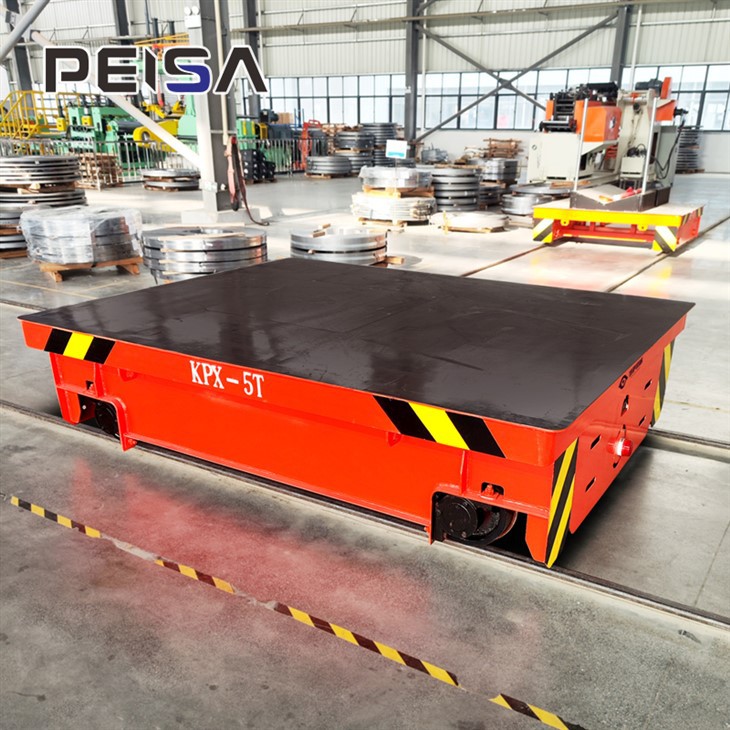
The Transfer Cart For For Handling Steel Plate is used in steel mills and metalworking factories. With a medium - capacity lead - acid battery, it usually takes about 8 - 10 hours to charge. On the other hand, a lithium - ion battery - powered version can be charged in just 2 - 3 hours.
Industrial Rail Cart
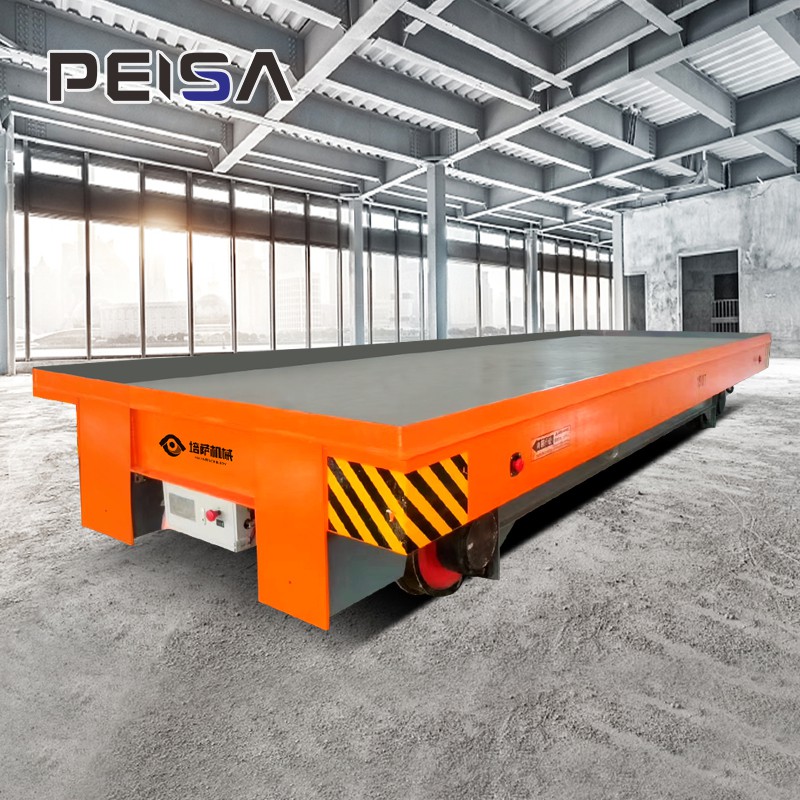
Our Industrial Rail Cart comes in various sizes and battery options. For the lead - acid battery models with a capacity of around 150Ah, the charging time is approximately 9 - 11 hours. For the lithium - ion battery variants, the charging time is reduced to 2 - 3 hours.
Tips for Reducing Charging Time
- Use a high - power charger: If your Equipment Transfer Cart allows, invest in a charger with a higher output current. This can significantly reduce the charging time.
- Avoid deep discharges: Try to recharge the battery before it is completely discharged. This will not only reduce the charging time but also extend the battery's lifespan.
- Opt for lithium - ion batteries: If the budget allows, consider using lithium - ion batteries for your transfer cart. Their fast - charging capabilities can improve the overall efficiency of your operations.
Conclusion
The charging time of an Equipment Transfer Cart's battery depends on multiple factors, including battery capacity, charger output, battery type, and the state of discharge. By understanding these factors, you can make informed decisions when choosing a transfer cart and a charging solution for your business.
We are committed to providing high - quality Equipment Transfer Carts with the best battery performance to meet your industrial needs. If you have any questions about our products, or if you are interested in purchasing an Equipment Transfer Cart, please feel free to contact us for a detailed consultation. Our team of experts will be happy to assist you in selecting the most suitable product for your specific requirements.
References
- Battery Technology Handbook, [Author's Name], [Publication Year]
- Industrial Equipment Charging Guidelines, [Organization Name], [Publication Year]